
Know the rules. Cast with confidence.
The official INEC voting procedure for the 2027 general elections — updated for the 2026 cycle. Walk into your polling unit knowing exactly what happens, what to bring, and what your rights are.
- Voting opens
- 8:30 AM
- At every polling unit
- Voting closes
- 2:30 PM
- Queue counts
- Required
- PVC
- No card, no vote
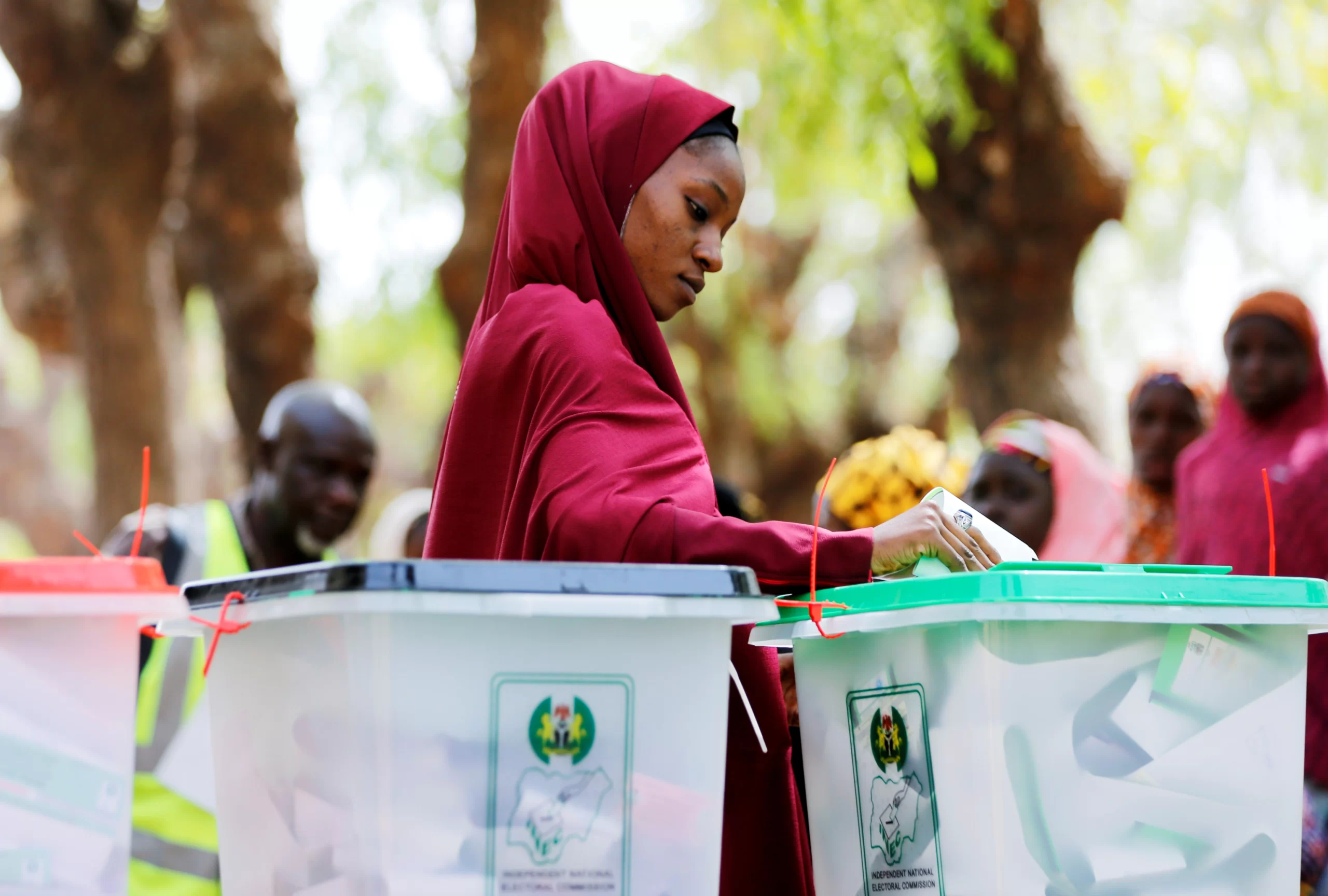
Your vote is your voice. Show up early, follow the steps, protect the result.
Official Election Voting Procedure
Voting in Nigeria is governed by the Electoral Act 2026 and administered by the Independent National Electoral Commission (INEC). Since 2023, every polling unit uses the Bimodal Voter Accreditation System (BVAS) — a biometric device that reads your PVC and verifies your fingerprint or face before you can collect a ballot paper.
Once polls close, results from each polling unit are recorded on Form EC8A, photographed by the Presiding Officer and uploaded directly to the INEC Result Viewing Portal (IReV) so any citizen can verify the score from their phone.
No PVC, no BVAS, no vote. If you are not biometrically accredited on the BVAS device, you cannot legally cast a ballot — even if your name is on the paper register.
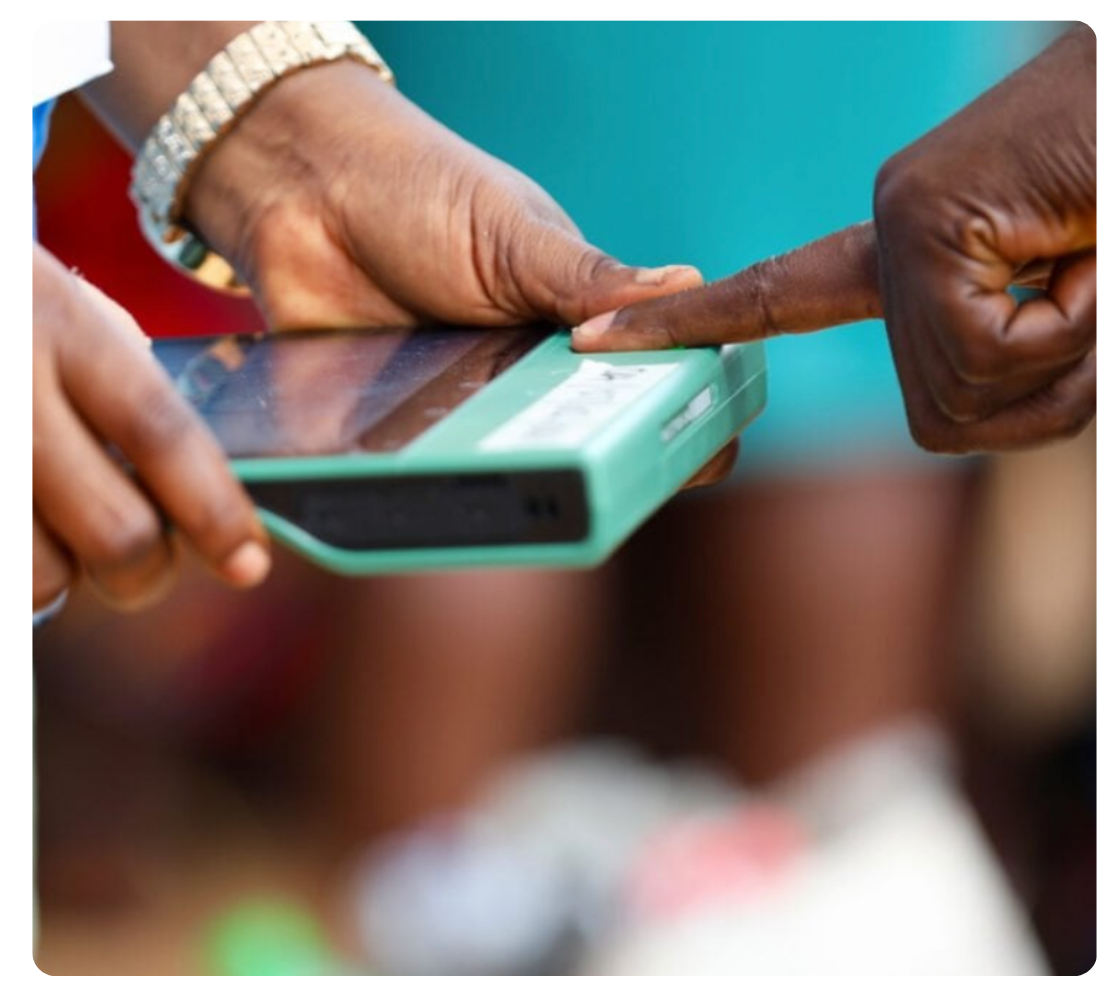
BVAS biometric accreditation in progress at a Nigerian polling unit.
The step-by-step process
Six clear steps from arrival to result protection.
- 01
Arrive at your polling unit
Get there from 8:00 AM. Find the polling unit code that matches the four-digit code on your PVC. Join the orderly queue.
- 02
Present your PVC for accreditation
Hand your PVC to the Presiding Officer. Your card is scanned and the Bimodal Voter Accreditation System (BVAS) verifies your fingerprint or face.
- 03
Receive your ballot paper
Once accredited, your name is ticked on the register and you are issued a stamped, signed ballot paper for each election being held.
- 04
Vote in secret
Step into the voting cubicle. Thumbprint clearly inside the box of your chosen candidate. One thumbprint, one box — anything else may invalidate your vote.
- 05
Cast your ballot
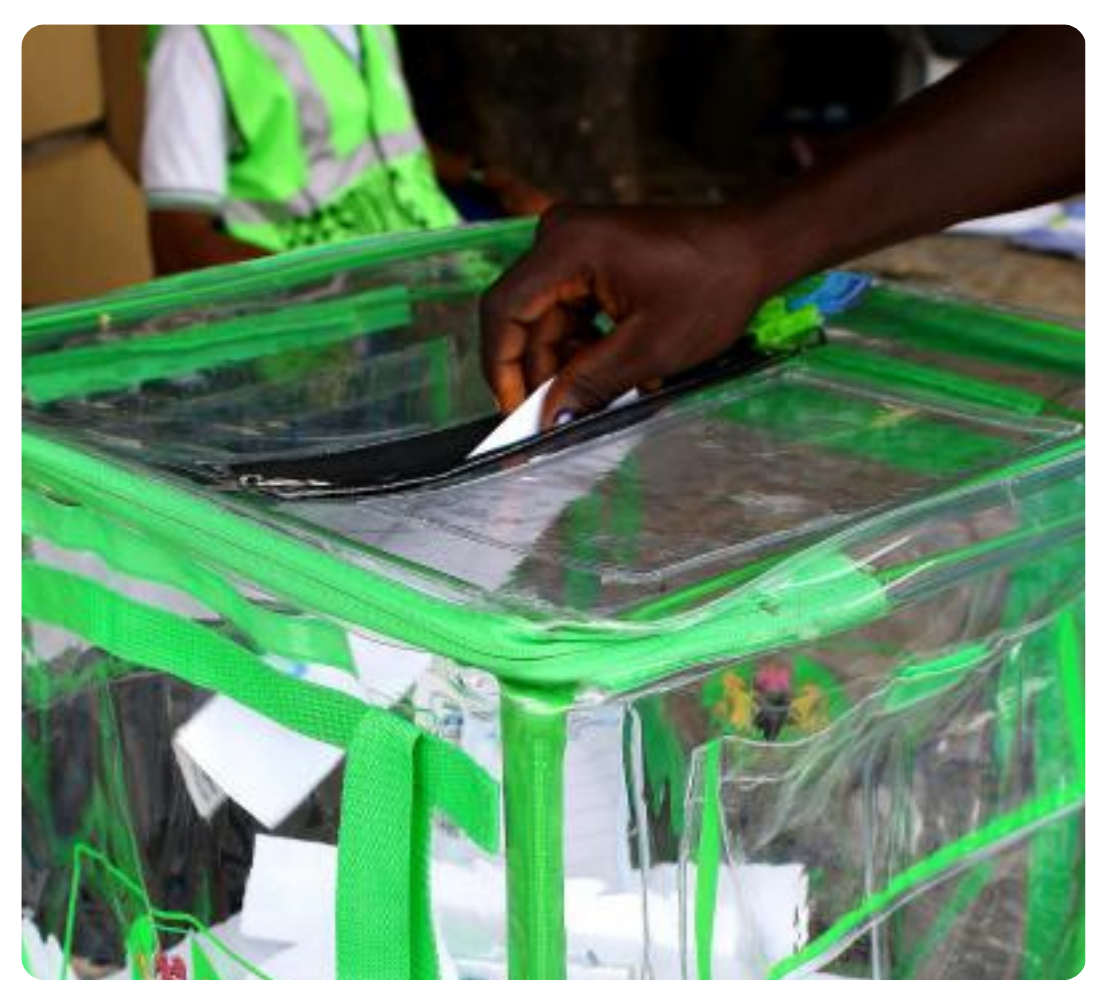
Fold your ballot paper with the markings inside and drop it into the correct transparent ballot box for that election.
- 06
Stay, watch, protect your vote
After voting you have a right to remain at the polling unit while ballots are counted, results are announced, and the result sheet (Form EC8A) is uploaded to IReV.
Your rights as a voter.
The Electoral Act 2026 and the 1999 Constitution guarantee every accredited Nigerian voter the rights below. If any of them is violated at your polling unit, document it and report immediately.
Vote freely & in secret
No one — party agent, security operative or community leader — may watch how you mark your ballot or pressure your choice.
Be treated with dignity
INEC officials must serve you politely regardless of your ethnicity, religion, gender, age or political affiliation.
Receive assistance if needed
Voters with disabilities, the elderly, pregnant women and nursing mothers are entitled to priority and assisted voting.
Observe the counting
You may stay at your polling unit to watch ballots being sorted, counted and the result sheet being completed and announced.
See the result sheet
The signed Form EC8A must be pasted publicly at the polling unit. You may photograph it and check it on the IReV portal.
Report violations
Vote buying, intimidation, ballot snatching and BVAS sabotage are crimes. Report them to INEC, security agencies or election observers.
Use your PVC to locate your polling unit.
Look at the front of your Permanent Voter Card. The four-segment number printed next to CODE: is your polling unit code — it tells you exactly where you must vote. You cannot vote at any other polling unit.
How to read the code
- 24State — the first two digits identify your state.
- 15Local Government Area — the next two pinpoint your LGA.
- 09Registration Area / Ward — the third pair narrows you to your ward.
- 039Polling unit — the final three digits are your specific polling unit.
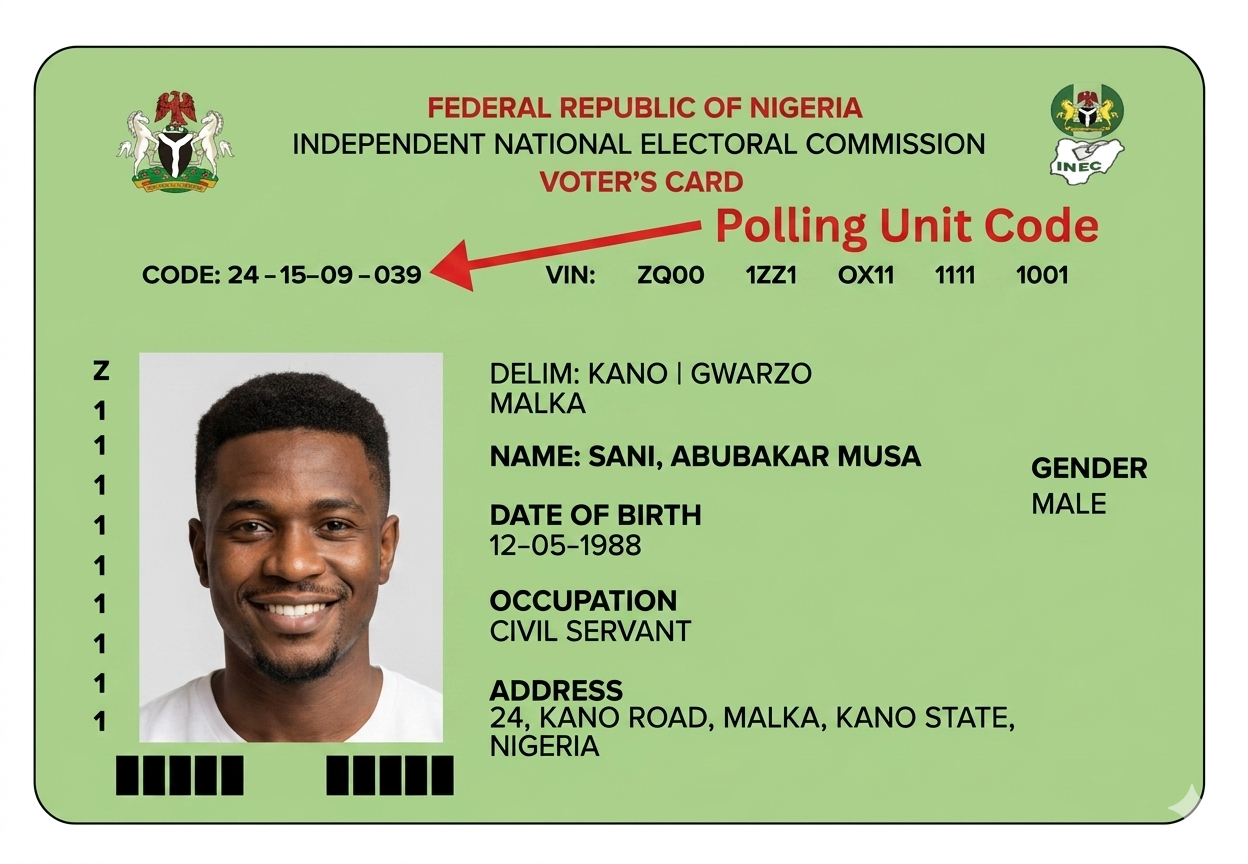
The four-part code on the top-left of your PVC is your polling unit address.
What to bring on election day
Pack the night before. Travel light, but be ready for a long, hot day.
- Your Permanent Voter Card (PVC) — non-negotiable
- A pen (optional — INEC provides ink)
- Bottled water and a small snack
- Sun protection: cap, umbrella or sunglasses
- A book or charged phone for the queue
What you must NOT bring
These items are prohibited at polling units and may disqualify your vote or get you arrested.
- Mobile phones inside the voting cubicle
- Cameras or recording devices in the booth
- Party-branded clothing, caps or scarves
- Weapons of any kind
- Cash or items you do not want to lose in a crowd
How the day is expected to unfolds at your polling unit.
Times are uniform across all 176,846 polling units in Nigeria. Plan to arrive early and stay until the result is announced.
8:00 AM
Polling unit setup
INEC officials arrive, set up cubicles and prepare the BVAS device.
8:30 AM
Accreditation & voting begins
The first voter is called forward. Queues form behind the polling unit signage.
2:30 PM
Voting officially closes
Anyone already in the queue at this time MUST be allowed to vote — do not leave the line.
After 2:30 PM
Sorting, counting & announcement
Ballots are sorted and counted in public. The result is announced and Form EC8A is signed.
Same day
Upload to IReV
The Presiding Officer photographs Form EC8A and uploads it directly from the BVAS to the IReV portal.
Voting day, answered.
Common questions Nigerians ask before heading to their polling unit. Still unsure? Talk to the OK Movement team.
Ask the teamWhat time does voting start and end?
Accreditation and voting run from 8:30 AM to 2:30 PM. If you are already in the queue at 2:30 PM, you must be allowed to vote — do not leave the line.
What if BVAS fails to recognise my fingerprint?
The Presiding Officer will attempt facial recognition. If both fail and you appear on the register, INEC procedure allows manual verification, but you cannot be turned away simply because the device misreads.
Can I vote at any polling unit?
No. You can only vote at the specific polling unit where you registered, indicated by the code on your PVC. Voting elsewhere is not permitted.
What happens if my ballot is rejected?
Ballots are rejected for double thumbprints, marks outside the box, or unstamped papers. You generally cannot get a replacement, so mark carefully — one clear thumbprint inside one box.
Can I take photos at the polling unit?
Yes — you may photograph the publicly pasted result sheet (Form EC8A) and the general environment, but not your own ballot inside the cubicle.
Who can I report irregularities to?
Report to the Presiding Officer first, then to accredited observers, INEC's situation room, the police, or independent monitors like Yiaga Africa. Document with photos and timestamps.